

The Mustang Got the Movies. The 1969 Camaro SS Got the Streets.
The Mustang got the movies. The Camaro got the streets. And the streets don't lie.
In 1969, you didn't buy a Camaro SS to impress anyone. You bought it because something inside you refused to settle. Because the sound of a 396 big-block at full throttle wasn't just mechanical — it was personal. It was a declaration.
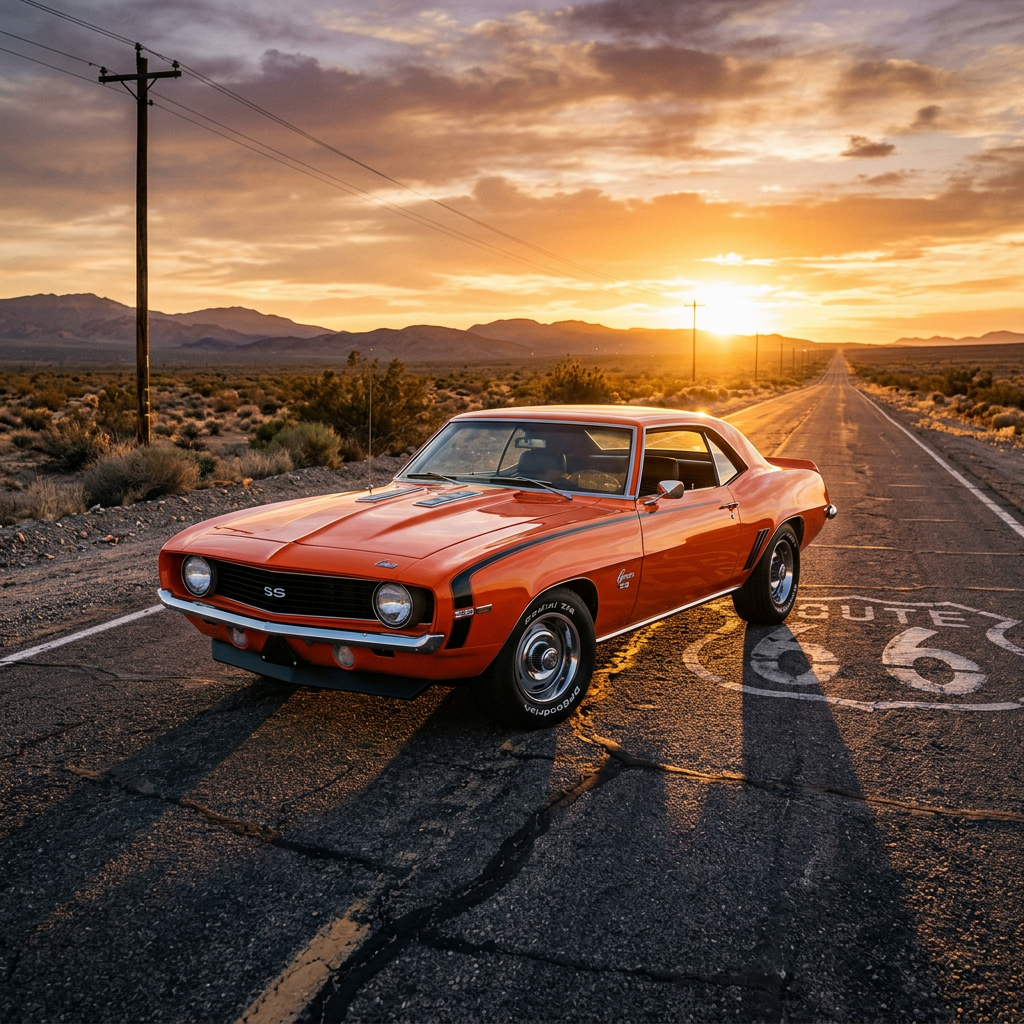
Why Chevrolet Built a Car That Terrified Even Them
It started with fear. In 1964, Ford released the Mustang and sold 418,000 units in its first year alone. Chevrolet — the biggest name in American automobiles — had nothing to answer with. The Corvair was too strange. The Nova was too practical. They needed something that felt dangerous.
The Camaro launched in 1967, two years after the Mustang, playing catch-up in the most American way possible: by building something faster, louder, and angrier. By 1969, they had perfected the formula. The body was sharper — sleeker doors, deeper-set headlights, a new rear fascia with triple pod taillights that looked like rocket exhaust. And under the hood, they had stopped being polite entirely.
The name "Camaro" reportedly derived from the French word for "friend." But nothing about the SS396 felt friendly. It felt like a challenge.
What the SS Package Actually Meant
Super Sport wasn't just a badge. It was a commitment. When you checked the SS option on your 1969 Camaro order form, you were walking away from subtlety for good.
The base SS came with a 350 cubic inch V8 making 300 horsepower — already more than most cars on the road. But that was just the beginning. You could step up to the L35 396 at 325hp, the L34 at 350hp, or the L78 at 375 horsepower of pure big-block aggression. If that wasn't enough, Chevrolet's Central Office Production Order (COPO) system offered the L72 427 at 425hp, or the hand-built all-aluminum ZL1 big-block — underrated at 430hp, capable of far more.
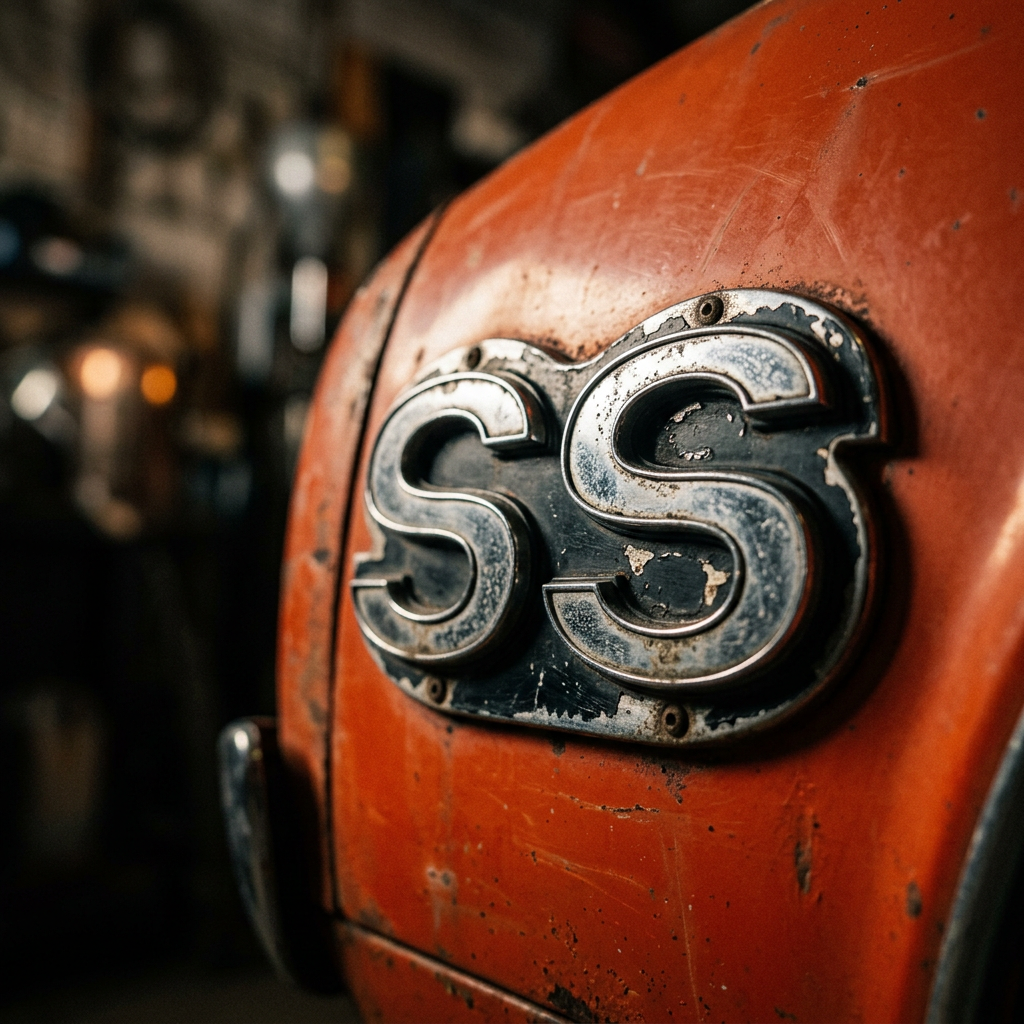
Every SS came with a heavy-duty suspension, SS badging, and — for 1969 — a four-speed manual with a Hurst shifter that clicked into gear like a rifle bolt. The cowl induction hood was available, feeding cold air directly from the base of the windshield into a hungry carburetor. Hugger Orange was the color of the year. If you saw one in that shade, you remembered it for the rest of your life.
The Car That Owned 1969 America
1969 was not a gentle year. Vietnam was still bleeding. The Moon landing made the whole world hold its breath. Woodstock happened in a farm field in New York and felt like a civilization changing course. America was arguing with itself about everything — race, war, identity, the future.
And in the middle of all of it, Chevrolet built 243,085 Camaros. The SS396 was the one people talked about. The Indy 500 Pace Car that year was a Camaro RS/SS in Dover White with Hugger Orange stripes — 130 replicas were made, each with an orange interior and houndstooth cloth. They're worth six figures today.
Then there were the Yenkos. Don Yenko, a Pittsburgh dealer, used the COPO system to order 201 Camaros with the L72 427 motor, cowl induction hoods, and disc brakes — then added his own graphics and badging. Yenko Camaros are now some of the most valuable muscle cars in existence. At Barrett-Jackson, verified examples have crossed the $500,000 mark.
Why the '69 SS Is Still the One Collectors Hunt
Fifty-seven years later, the 1969 Camaro SS hasn't faded. It's appreciated — in every sense of the word. Standard SS396 examples in good condition regularly sell between $45,000 and $85,000. Documented COPO 427 cars push well past $200,000. And a numbers-matching ZL1? Plan on spending more than most houses.
But it's not just money. At every Barrett-Jackson auction, when a clean '69 SS rolls across the block in Hugger Orange, the room goes quiet for a second. Not because of the price. Because of the feeling. Because someone in that room — usually someone in their fifties or sixties — is looking at the car their father almost bought, or the car they drove once at 22 and never forgot.
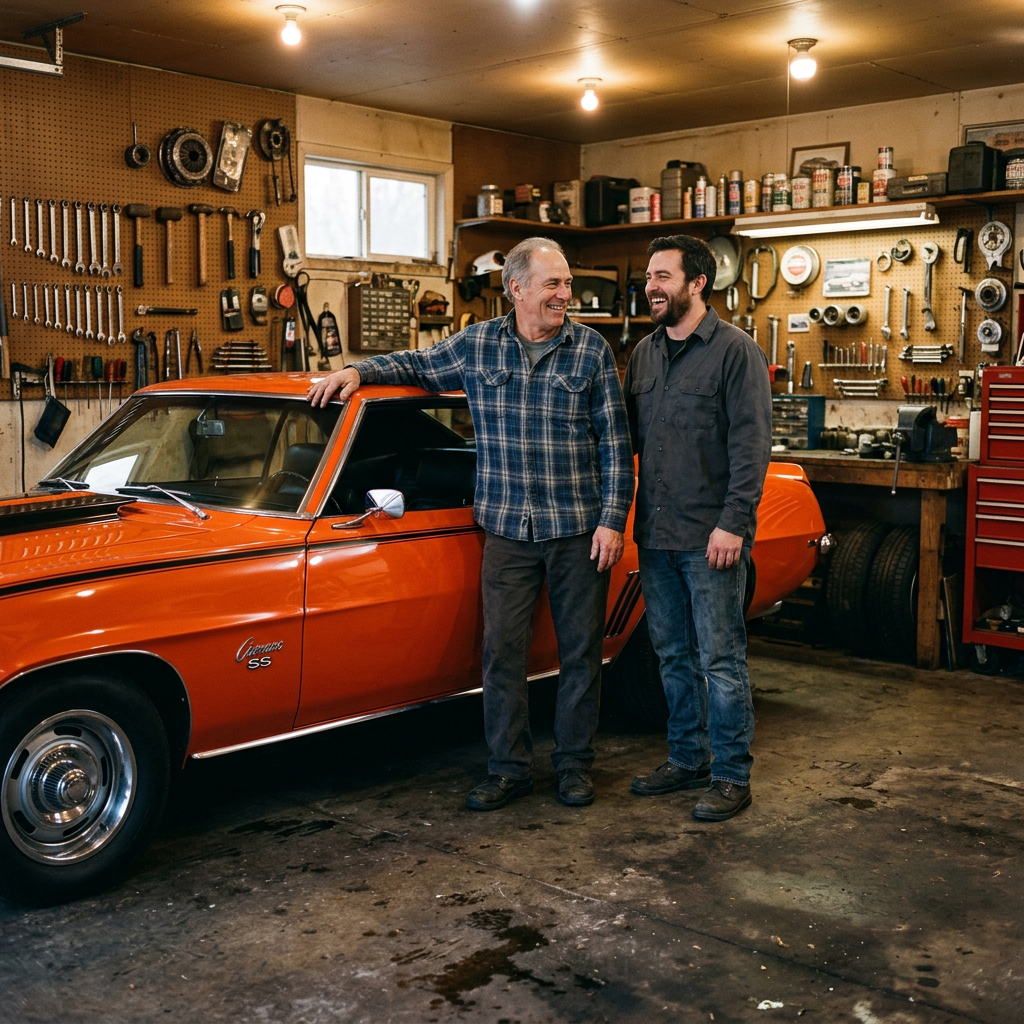
How to Carry the Legend Home
Not everyone can park a '69 Camaro SS in their garage. But the feeling it represents — that particular American pride, that muscle car swagger, that sense of an era when cars had personality — that's something worth holding onto.
At Leaves Design, we craft custom metal signs for people who carry that love in their blood. A handcrafted classic car metal sign isn't just wall art. It's the story of a car, a generation, and the people who loved both — rendered in steel, built to last as long as the legend itself.
The car may be out of reach. The feeling never has to be.
Frequently Asked Questions
Q: What engine did the 1969 Camaro SS have?
A: The 1969 Camaro SS came with multiple engine options. The base SS350 used a 300hp L48 V8. The SS396 offered the L35 (325hp), L34 (350hp), or L78 (375hp) big-blocks. COPO buyers could also get the L72 427 (425hp) or the legendary all-aluminum ZL1 (430hp+).
Q: How many 1969 Camaro SS were made?
A: Total 1969 Camaro production was 243,085 units. Of those, 34,932 were built with the SS396 package. COPO 427 cars were far rarer — only 1,015 were ordered through the COPO system in 1969.
Q: What is a 1969 Camaro SS worth today?
A: Values vary widely by condition and documentation. A solid driver-quality SS396 typically sells for $45,000–$85,000. Numbers-matching, documented examples reach $100,000–$200,000+. COPO 427 and ZL1 cars can exceed $500,000 at auction.
Q: What's the difference between the 1969 Camaro SS and Z/28?
A: The SS was built for straight-line performance with large displacement V8s. The Z/28 was built for road racing — it used a high-revving 302 small-block, four-wheel disc brakes, and racing suspension. The Z/28 was track-focused; the SS was street-focused.
Q: What was the most popular color for the 1969 Camaro SS?
A: Hugger Orange (color code 72) became the iconic color of the 1969 Camaro, used on the Indy Pace Car replicas and heavily associated with the SS. Other popular colors included Fathom Green, LeMans Blue, and Rally Green.
The 1969 Camaro SS wasn't built to be remembered. It was built to be felt. Fifty-seven years later, it's still doing both.